There are destinations you visit with a fairly clear idea of what you’re going to find, and others that continually challenge your expectations as you travel. Iowa, for me, was very much the latter.
Before visiting, I already knew many of the individual stories associated with the state. I knew about the Field of Dreams, the Bridges of Madison County and Iowa’s agricultural heritage. What I hadn’t fully appreciated was how those familiar stories fitted into a much bigger picture—a destination shaped by remarkable architecture, creative cities, immigrant heritage, distinctive food and drink, beautiful landscapes and communities with an enormous sense of pride in the places they call home.
Flying into Minneapolis-St. Paul provided our gateway into the Midwest, and from there we headed south into Iowa. Over the days that followed, what struck me wasn’t simply the number of experiences we packed into the journey, but their extraordinary variety. One moment we were stepping inside a Frank Lloyd Wright-designed building, another we were driving between historic covered bridges, dining on a farm, discovering European heritage or standing beside one of the most recognisable baseball fields in America.
For someone who spends much of their working life creating USA holidays for UK travellers, it quickly became apparent that Iowa has a much bigger tourism story to tell.
An Iowa I Hadn’t Expected
One of the first surprises came in Mason City.
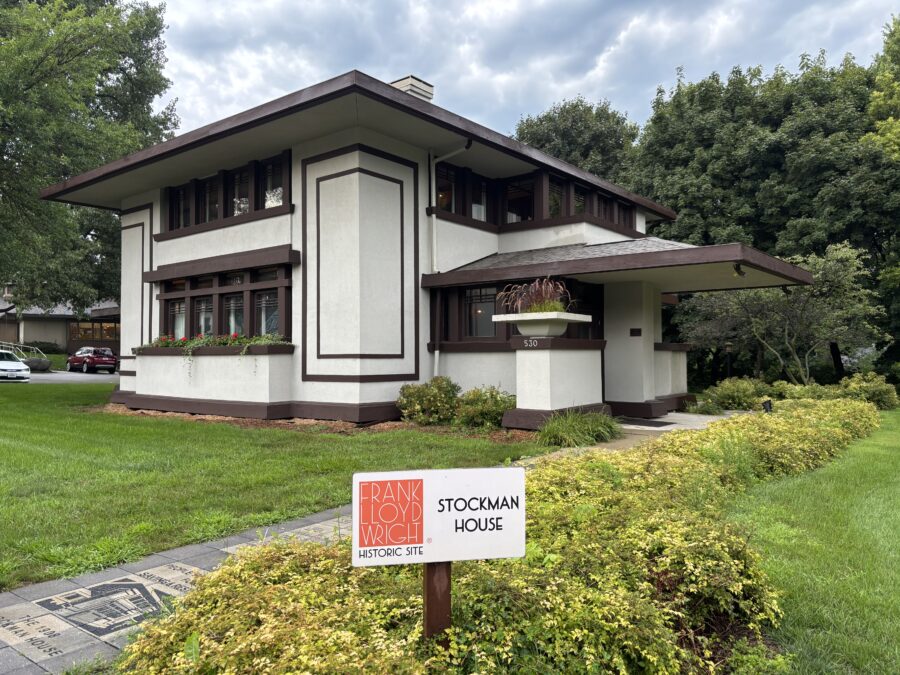
Architecture isn’t necessarily the first thing an international traveller associates with Iowa, yet here we toured the Stockman House, designed by Frank Lloyd Wright, before visiting the Historic Park Inn, the world’s last remaining hotel designed by the legendary architect. Seeing these buildings in person was impressive, but what made Mason City particularly interesting was discovering that Prairie School architecture isn’t confined to a single attraction. It forms part of the character of the city itself.
That sense of creativity followed us to Des Moines, where we explored the John and Mary Pappajohn Sculpture Park. Monumental works by internationally recognised artists sit within an urban park in the heart of the city, presenting a contemporary side of America’s Heartland that many first-time visitors may not expect.
We also had the unusual opportunity to go behind the scenes at the Iowa State Fair just days before it opened. For anyone in the UK unfamiliar with the American state fair tradition, describing it simply as a fair doesn’t really do it justice. Held over 11 days and typically attracting more than one million visitors, it brings together agriculture, livestock competitions, food, music, entertainment, crafts and generations of family traditions in one enormous celebration.
Walking through the fairgrounds as preparations were gathering pace gave us a fascinating insight into the scale of what was about to happen. Exhibition areas were being readied, vendors were preparing for the crowds, and the sense of anticipation was already building. It was one of those experiences that made me want to return and see the fair in full swing.
Classic Americana – and Something More

If Mason City and Des Moines challenged some of my preconceptions, Madison County delivered the kind of classic Americana I’d hoped to find.
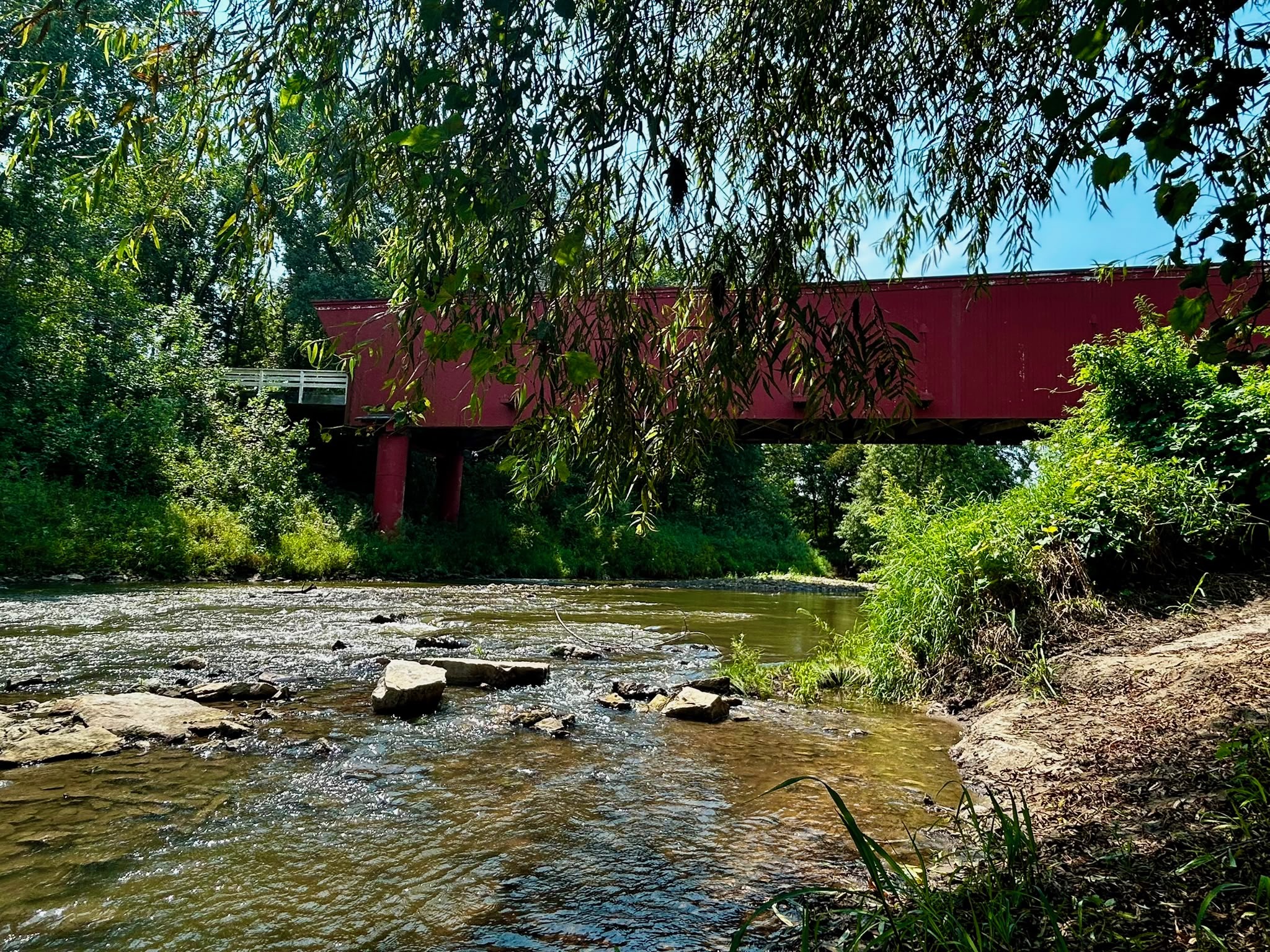
In Winterset, we explored the historic downtown square before heading into the surrounding countryside for a tour of the famous covered bridges immortalised by The Bridges of Madison County. Photographs are one thing; driving the rural roads between the bridges and seeing them within the landscape that made them famous is something else entirely. Rolling farmland, country roads and historic bridges combine to create an experience that feels wonderfully cinematic without feeling staged for visitors.
Madison County also provided one of the most memorable meals of our journey. The Lost Table, set within the grounds of Speckled Hen Farm and Lone Oaks Barn, takes the phrase “farm to table” and makes it wonderfully literal. Dining surrounded by the landscape and agricultural traditions behind the food created a genuine connection between place and plate and demonstrated just how effectively Iowa is turning its farming heritage into memorable visitor experiences.
That became one of the recurring themes of the trip. Agriculture here isn’t simply something you see through the car window; it influences the food, drink, landscapes, communities and traditions you experience along the way.
Heritage That Still Feels Alive
As we travelled further, another side of the state began to emerge through communities whose European heritage remains an important part of their identity.
In Pella, we explored the Historical Village and its impressive working windmill, discovering a town where Dutch traditions remain visible through its architecture and cultural celebrations. The Amana Colonies offered another fascinating story, with seven historic villages preserving the legacy of German immigrants who established a communal society here during the nineteenth century.
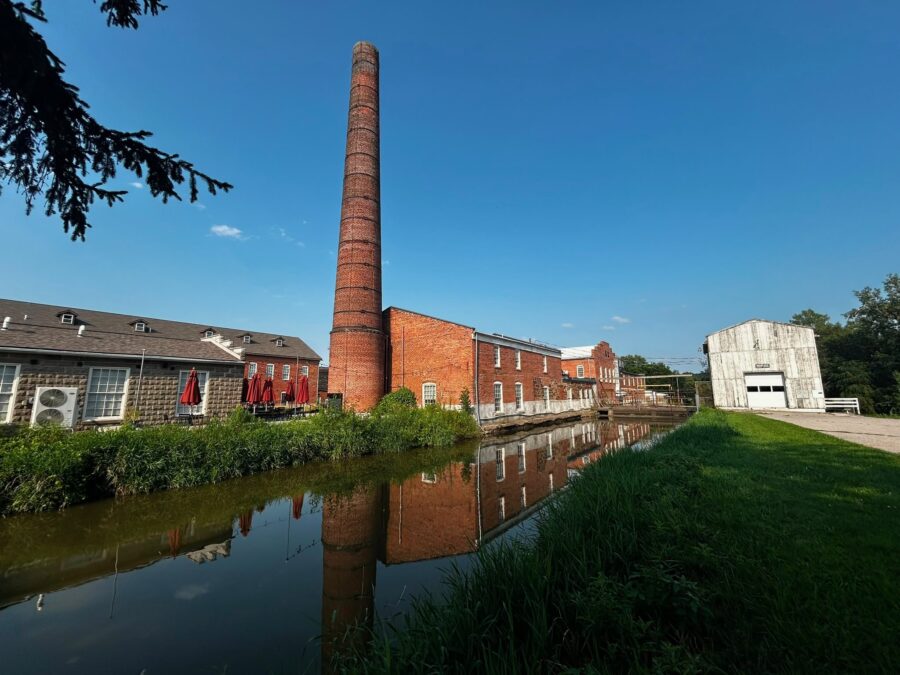
What I particularly enjoyed about Amana was seeing how that heritage is being carried forward rather than simply preserved. Hotel Millwright is a perfect example. Created within part of the historic Amana Woolen Mill complex, it retains the industrial character of the building while providing a stylish contemporary place to stay. For me, that’s exactly the kind of accommodation that elevates a self-drive itinerary because the hotel becomes part of the destination experience rather than simply somewhere to spend the night.
Cedar Rapids added another layer. At the National Czech & Slovak Museum & Library, we discovered the stories of immigrants whose experiences helped shape the region, while Brucemore offered a very different perspective through its historic mansion, landscaped estate and the families connected with it. A tour of the beautifully restored Paramount Theatre demonstrated yet again how historic buildings are being preserved, reimagined and returned to the heart of their communities.
What began to stand out was that these weren’t isolated heritage attractions. Collectively, they told the story of how different waves of immigration, industry, agriculture and creativity helped shape the Iowa we were experiencing today.
From Iowa Corn to Iowa Bourbon

That connection between past and present was just as apparent in the state’s food and drink.
At Cedar Ridge Distillery near Swisher, one of Iowa’s most recognisable agricultural products becomes the starting point for something altogether different. Locally grown corn is transformed into award-winning bourbon, creating a wonderfully simple connection between the landscape outside and what’s eventually poured into the glass.
For me, experiences such as Cedar Ridge and The Lost Table demonstrated the potential of Iowa’s culinary story. The attraction isn’t simply what you’re eating or drinking; it’s understanding where it came from, meeting the people behind it and discovering why it belongs specifically to this place.
That’s the kind of authenticity increasingly sought by experienced travellers. Rather than arriving with a list of famous restaurants to tick off, you discover food and drink as part of the journey itself.
Cities with Stories of Their Own
Another misconception the trip quickly dispelled was that the cities would simply provide convenient overnight stops between rural attractions.
Iowa City proved otherwise. As America’s first UNESCO City of Literature and home to the internationally renowned University of Iowa Writers’ Workshop, it has an identity built around books, ideas and creativity. Its compact downtown and youthful energy felt quite different from anywhere else we’d visited.
Cedar Rapids had its immigrant heritage and regeneration; Mason City its architecture; Des Moines combined contemporary art with the energy of a state capital. Rather than competing with the small towns and countryside, these cities added another dimension to the road trip.
That’s important from a touring perspective. Variety is what keeps a self-drive journey interesting, and Iowa repeatedly changed character as we travelled through it.
If You Build It…
And then there was Dyersville.
Few attractions demonstrate the power of place quite like the Field of Dreams.
Before heading to the famous movie site, we toured the If You Build It Exhibit in downtown Dyersville, discovering more about the making of the 1989 film and the remarkable relationship that developed between Hollywood and this small Iowa community.
Then came the field itself.
Emerging from the surrounding cornfields, the white farmhouse and baseball diamond are instantly recognisable. Even if you’ve seen Field of Dreams countless times, there’s something quite surreal about standing in the landscape where it was filmed.
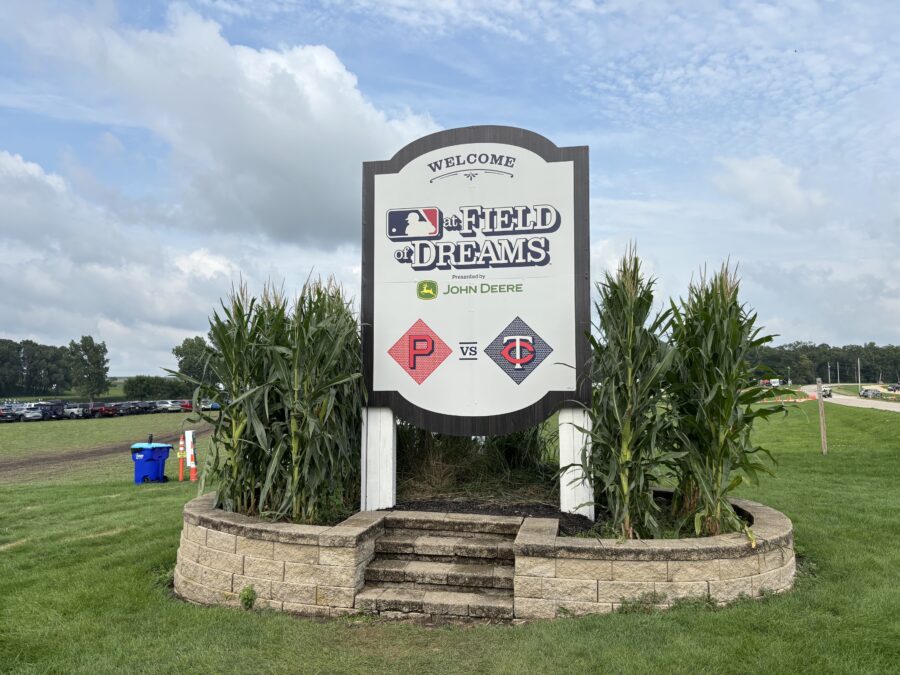
We were fortunate enough to experience it in an even more memorable way by watching an MLB game at the Field of Dreams. Seeing professional baseball played against that extraordinary backdrop was undoubtedly one of the defining moments of the trip. The connection between film, sport, landscape and American culture made it far more than simply attending a baseball game—it felt like being part of a story we’d known for years.
Yet Dyersville also reinforced something I’d been discovering throughout the journey. The famous attraction may draw you there, but the surrounding community adds depth to the experience. The exhibition, downtown murals, farmland and local connection with the film all encourage you to see more than the baseball diamond itself.
One Final Surprise
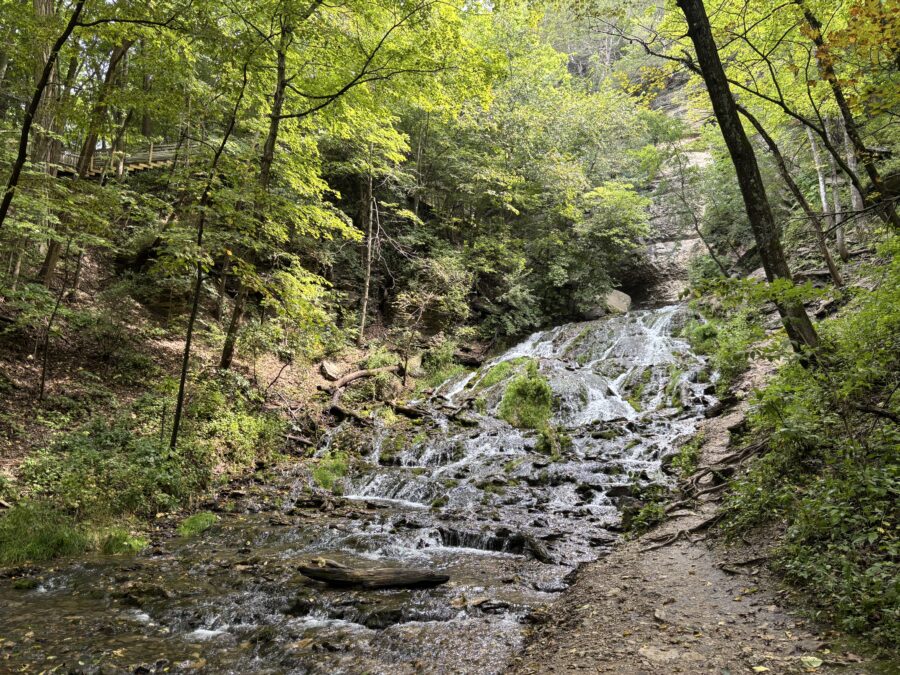
By the time we reached Decorah, I thought I had developed a fairly good understanding of Iowa. Then the landscape changed again.
Northeast Iowa introduced rolling hills, wooded river valleys and limestone bluffs, providing a striking setting for a community with strong Norwegian-American roots. Decorah’s Scandinavian heritage gives the town its own distinctive identity, while the surrounding landscape creates opportunities for walking, cycling and outdoor adventure.
It felt like an appropriate place to reflect on the journey because it demonstrated exactly what had surprised me most. There isn’t one Iowa experience.
The state we’d travelled through had moved from Prairie School architecture to contemporary sculpture, Dutch and German communities to Czech, Slovak and Norwegian heritage, covered bridges to literary culture, farm-to-table dining to bourbon, rolling farmland to limestone bluffs—and ultimately to baseball beneath the lights at the Field of Dreams.
The Iowa I Came Home Talking About
When you return from a trip like this, people inevitably ask the same question: “What was the highlight?”
I’m still not sure I can give them one.
Watching baseball at the Field of Dreams was extraordinary. The Lost Table was a dining experience I’ll remember for a long time. Walking through Frank Lloyd Wright-designed buildings challenged my expectations before we’d barely begun the journey. The scale of the Iowa State Fair surprised me. The Amana Colonies, Cedar Rapids, Iowa City, Pella, Winterset and Decorah each revealed something completely different.
But perhaps my biggest takeaway wasn’t any individual attraction.
It was how well everything connected.
For UK travellers, particularly those who have already visited the United States several times and are searching for somewhere beyond the familiar, Iowa has enormous potential. It’s easy to navigate by car, the experiences are remarkably varied and there is a strong sense of place throughout the journey. You encounter many of the things we associate with classic America—Main Streets, baseball, farmland, covered bridges and welcoming communities—but also world-class architecture, contemporary art, distinctive cultural heritage, excellent food and drink and landscapes that continually challenge expectations.
Most importantly, it feels genuine.
I travelled to Iowa knowing many of the names and attractions on our itinerary. I returned understanding the destination behind them.
And that’s why I think more UK travellers should discover it for themselves.
Discover Iowa with Discover North America
First-hand destination knowledge is central to the holidays we create at Discover North America. Travelling through Iowa has given us the opportunity not simply to see its headline attractions, but to understand how its cities, small towns, landscapes and experiences can be brought together into a genuinely rewarding self-drive journey.
Inspired by many of the places and experiences featured in this journey, our Iowa’s Heartland Highlights itinerary gives you the opportunity to follow a similar route for yourself, discovering the Field of Dreams, the covered bridges of Madison County, distinctive cities, cultural heritage and welcoming communities that reveal so many different sides of the state.
Alternatively, our Travel Specialists can create a completely bespoke itinerary around the experiences that inspire you most. Whether you want to explore the Great River Road, delve deeper into Iowa’s architecture, heritage and food scene, combine its cities with the great outdoors or incorporate the state into a wider Midwest adventure, we’ll help create a journey that’s right for you.
Follow in our footsteps with Iowa’s Heartland Highlights or contact Discover North America and let us create your own journey through the Iowa that surprised us.